
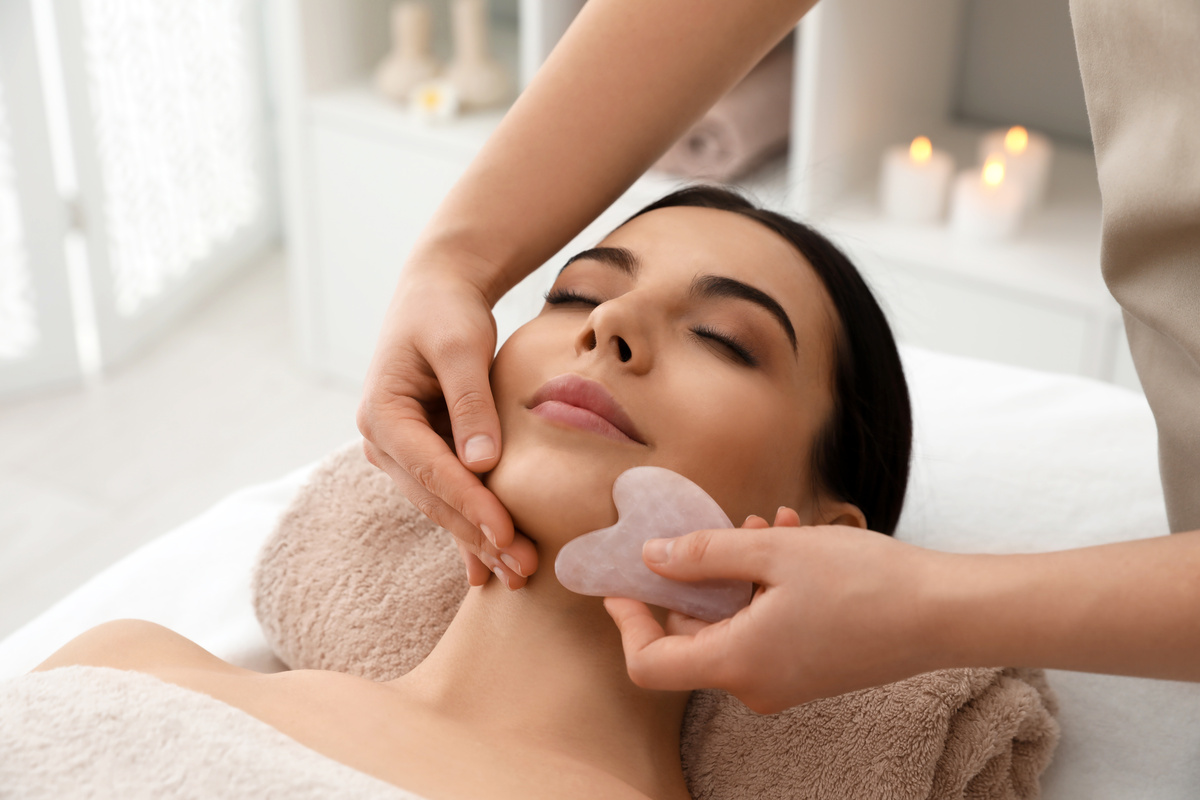
Ancient healing practices are experiencing a remarkable resurgence in modern wellness, and one technique stands out for its approach to facial care. Gua sha, a traditional Chinese medicine practice dating back centuries, offers a distinctive alternative to conventional facial massage that addresses both surface-level concerns and deeper tissue health through intentional, therapeutic strokes.
At Radiant Day Spa, we bring this time-honored technique to our clients across Bend, Sisters, and Jacksonville, Oregon. Our skilled practitioners know that every face carries its own history, and we have integrated gua sha into our facial treatments to offer a genuinely personalized approach to skin health and facial rejuvenation.
The Foundation of Gua Sha Practice
Gua sha distinguishes itself through its use of specialized tools and purposeful technique. Unlike traditional facial massage that relies primarily on fingertip pressure and circular motions, gua sha employs smooth-edged tools crafted from materials like jade, rose quartz, or stainless steel. These tools glide across your skin in deliberate, unidirectional strokes that follow your facial contours and natural lymphatic pathways.
Tool Selection and Technique
The tools used in gua sha are not merely decorative. Each stone carries different properties, with jade offering cooling effects and rose quartz providing gentle warmth. Your practitioner selects tools based on your specific skin concerns and treatment goals. The strokes themselves follow a systematic pattern, always moving in one direction, typically upward and outward from the center of your face, to encourage lymphatic drainage and reduce fluid retention.
Pressure and Purpose
Traditional facial massage often employs consistent, moderate pressure throughout the treatment. Gua sha uses varying pressure levels strategically applied to different facial zones. Areas with muscle tension may receive firmer strokes, while delicate zones like the under-eye area receive gentler treatment. This targeted approach addresses specific concerns rather than providing uniform pressure across the entire face.
Therapeutic Benefits Beyond Relaxation
While traditional facial massage excels at promoting relaxation and surface-level circulation, gua sha penetrates deeper into facial tissues. The technique stimulates blood flow in a way that traditional massage cannot replicate, bringing fresh oxygen and nutrients to your skin cells while encouraging the removal of metabolic waste products.
A 2025 study published in PubMed Central through the National Institutes of Health found that gua sha massage primarily influences muscle tone and deeper tissue properties, while producing measurable effects on skin circulation and radiance. Your skin responds to the controlled stimulation created by gua sha strokes by increasing circulation and activating its natural repair mechanisms, leading to improved skin tone, reduced puffiness, and a gradual lifting effect that develops with consistent treatment.
Lymphatic Drainage and Detoxification
Traditional facial massage provides some lymphatic benefits, but gua sha’s directional strokes create a more pronounced drainage effect. Your lymphatic system does not have a pump like your cardiovascular system does. It relies on movement and external pressure to function effectively. Gua sha’s sweeping motions actively move lymphatic fluid toward drainage points, reducing puffiness and supporting the body’s natural detoxification processes.
Visible Results in Facial Contours
Many clients notice differences after a gua sha treatment. The reduction in fluid retention can reveal more defined cheekbones, a sharper jawline, and reduced under-eye puffiness. These effects begin during treatment and continue developing in the hours that follow as your lymphatic system processes the stimulated fluid movement.
Addressing Your Specific Skin Concerns
Gua sha offers targeted solutions for concerns that traditional facial massage therapy may not fully address. The technique is particularly effective for:
- Jaw tension and TMJ discomfort: firm strokes along the jawline and masseter muscles release chronic tension patterns that build up from stress and habitual clenching
- Sinus congestion: sweeping motions across the cheeks and forehead promote drainage and reduce pressure
- Fine lines and skin texture: increased circulation supports collagen production and cellular renewal over time
- Uneven skin tone: enhanced blood flow brings a natural flush and improved radiance to dull complexions
- Product absorption: gua sha performed before serums or targeted treatments allows active ingredients to penetrate more effectively
Each concern receives individualized attention. Your practitioner adjusts tool selection, pressure, and stroke patterns to focus on what matters most to your skin right now.
The Gua Sha Treatment Experience
When you arrive for a gua sha facial at our Sisters or Jacksonville locations, you will notice the treatment follows a different rhythm than traditional massage. Rather than continuous circular motions, gua sha proceeds methodically through facial zones. Your practitioner applies a facial oil or serum to ensure smooth gliding, then works systematically from your neck upward, following the natural flow of your lymphatic system.
The sensation differs from traditional massage. While you will experience relaxation, you will also feel the distinctive purposeful pressure of the tool against your skin. Some areas may feel slightly tender if you are holding tension there, which helps your practitioner identify where you need the most attention.
How Gua Sha Integrates With Other Facial Treatments
Gua sha works well alongside other facial approaches rather than in place of them. At Radiant Day Spa, we integrate this technique with modern skincare to enhance the effectiveness of other treatments. The improved circulation and product absorption that gua sha creates helps active ingredients in serums and masks penetrate more deeply, maximizing the benefits of your full facial experience.
Many clients find that pairing gua sha with their regular facial appointments produces better cumulative results than either alone. If you have specific concerns, such as persistent jaw tension or chronic puffiness, mentioning them before your appointment helps your practitioner build a session that addresses them directly.
Making Gua Sha Part of Your Routine
Consistency amplifies gua sha’s benefits. While a single treatment produces noticeable results, regular sessions create cumulative improvements in facial contours, skin texture, and overall radiance. Many clients incorporate gua sha into their monthly wellness routines, treating it as essential maintenance for their skin health rather than an occasional extra.
Your practitioner can also show you simplified gua sha techniques for home use between professional treatments. At-home practice will not replicate the thoroughness of a professional session, but it extends the benefits and helps maintain your results in between.
Does gua sha hurt?
A professional gua sha facial should never be painful. You will feel firm, purposeful pressure, and areas where you hold tension may feel more sensitive, but the treatment is calibrated to stay comfortable throughout. If anything feels too intense, your practitioner can adjust immediately. The sensation is quite different from a relaxation massage, but it should always stay within a comfortable range.
How is gua sha different from using a facial roller at home?
Facial rollers primarily reduce puffiness through gentle massage and cooling effects. Gua sha uses angled, directional strokes at varying pressure levels to address deeper tissue, muscle tension, and lymphatic drainage more actively. Professional gua sha also involves a practitioner who reads your skin in real time and adjusts the technique throughout the session, which at-home tools cannot replicate.
How often should I get a gua sha facial?
Once a month is a common starting point for clients looking to maintain results. For specific concerns like chronic jaw tension or persistent puffiness, more frequent sessions in the early months can accelerate improvement. Your practitioner can help you determine a schedule based on your skin’s current state and what you are hoping to address.
Is gua sha appropriate for sensitive skin?
Yes, when performed by a trained practitioner. The pressure and technique are adjusted for sensitive or reactive skin, and the tools used are smooth and gentle on the surface. It is worth mentioning any sensitivities or active skin concerns before your appointment so your practitioner can tailor the approach from the start.
Experience Gua Sha at Radiant Day Spa in Central Oregon
For over four years, Radiant Day Spa has been a trusted wellness sanctuary in Oregon, providing authentic, results-driven treatments that address both body and skin. Our practitioners deliver care with genuine attentiveness, and we have been honored as Best Day Spa and Best Massage Therapist through the Source of Central Oregon Readers Poll. That recognition reflects the relationships we build with every client who comes through our doors.
Whether you are seeking relief from facial tension, hoping to improve your skin’s natural radiance, or simply curious about this traditional technique, our team is here to guide you. We frequently offer same-day appointments, so you can prioritize your skin when it needs it most. Book your gua sha facial today and discover how this approach can change what your skin care routine is capable of.