
The difference comes down to intention. A relaxation massage is designed to calm your nervous system, ease tension, and allow your body to rest fully. A deep tissue massage is designed to work through layers of muscle and connective tissue to address chronic tightness, pain, and restricted movement. Both are valuable, and knowing which one fits your body right now is the first step toward getting the most out of your time on the table.
At Radiant Day Spa, our massage therapists hold advanced certifications, pursue continuing education, and bring a genuine passion for their craft to every session. Serving guests across Bend, Sisters, and Jacksonville, Oregon, our award-winning team takes a personalized, one-on-one approach to every appointment to make sure the treatment you receive is the one your body actually needs.
What a Relaxation Massage Does
A relaxation massage, often called a Swedish massage, uses long, flowing strokes, gentle kneading, and rhythmic pressure to encourage the body into a state of calm. The goal is not to target a specific problem but to support the parasympathetic nervous system, the part of the body responsible for rest and recovery.
The National Center for Complementary and Integrative Health notes that massage therapy has been shown to reduce stress, lower heart rate, and improve overall sense of well-being. A relaxation massage is the most direct path to those benefits. It is ideal for anyone dealing with general stress, poor sleep, or anxiety, and is a reliable option when you simply need a complete mental and physical reset. There is no soreness afterward, and most guests leave feeling deeply rested and restored.
Sessions are typically tailored to your preferences for pressure, focus area, and ambiance. Whether you are visiting for the first time or returning as part of a regular wellness routine, the format is flexible enough to meet you where you are and give your nervous system the reset it is asking for.
What a Deep Tissue Massage Does
Deep tissue massage uses more focused, deliberate pressure to target the deeper layers of muscle and fascia. It is particularly effective for people with chronic muscle tension, recurring tightness from physical activity, or areas that have not responded to lighter treatment.
The techniques used in deep tissue work are slower and more precise than those in a relaxation session. Your therapist may use forearms, elbows, or thumbs to work through adhesions and release areas of restriction. Some mild soreness the following day is normal and typically resolves within 24 to 48 hours. This type of massage pairs especially well with our body treatments for guests focused on physical recovery and ongoing muscle health.
Deep tissue work is particularly beneficial for those who spend long hours at a desk, engage in regular physical activity, or carry tension that has accumulated over weeks and months. Rather than offering temporary relief, the work targets the underlying restriction so the results carry further between sessions.
How to Choose the Right Massage for You
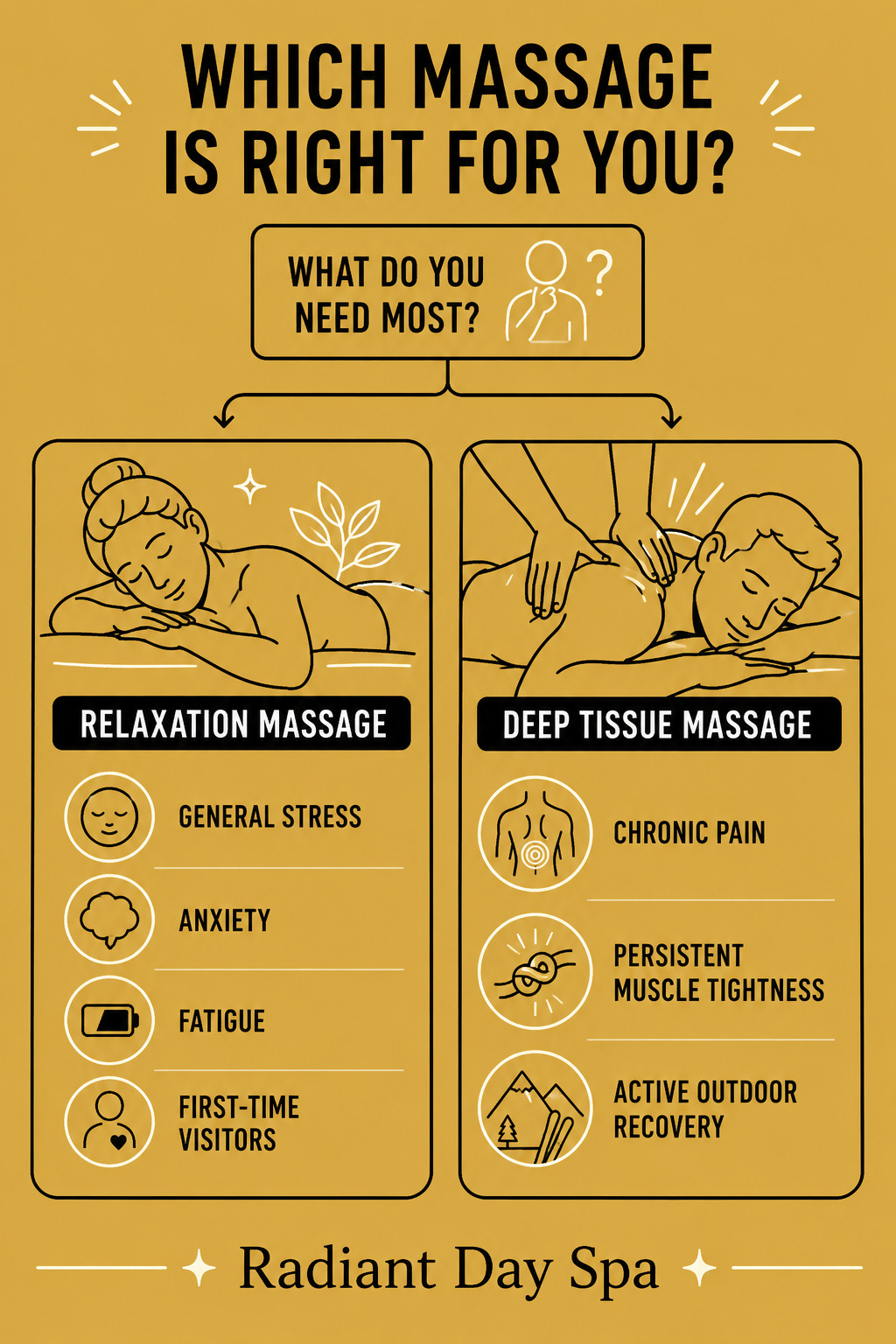
Choosing between the two comes down to what your body is asking for. Here are the most helpful questions to consider before booking:
- Stress and tension: If you are dealing with general stress, anxiety, or fatigue, a relaxation massage gives your nervous system what it needs to recover.
- Chronic pain or tightness: If you have a specific area of persistent tension, recurring discomfort, or muscle tightness from activity, deep tissue work is the more targeted approach.
- First-time visitor: If you are new to massage therapy, a relaxation massage is a gentle and welcoming place to start before exploring deeper work.
- Post-activity recovery: Active lifestyles in the Pacific Northwest put real demands on the body. Deep tissue massage is well-suited for anyone recovering from hiking, skiing, or other physical pursuits.
Both massage types are available at our Sisters and Jacksonville locations, and our team is always happy to talk through which option best fits your goals before your session begins.
Find the Best Massage for Your Body at Radiant Day Spa
Our massage therapists bring advanced training, genuine passion, and careful attention to every session. Radiant Day Spa was recognized as Best Day Spa and Best Massage Therapist in Source Weekly’s Best of Central Oregon 2025 readers’ poll, an honor driven by thousands of community votes and a team that shows up for every guest with care and skill. You can also explore our guide to the health benefits of regular massage therapy to learn more about building massage into your wellness routine.
Same-day appointments are frequently available, and there are no cancellation fees, because your wellness should always be within reach. Book your massage at Radiant Day Spa today and let our team help you find the right fit for your body.
Is deep tissue massage painful?
Deep tissue massage involves firm, focused pressure that can feel intense in areas of tight tissue. Most guests describe it as a productive discomfort rather than sharp pain. Your therapist will check in with you throughout the session and adjust pressure as needed. Mild soreness the following day is normal and typically resolves within 24 to 48 hours.
How often should I get a massage?
For general stress relief and relaxation, once a month is a common starting point. If you are working through chronic tightness or recovering from physical activity, more frequent sessions, such as every two to three weeks, can help you build on each appointment and see more lasting results over time.
Can I switch between relaxation and deep tissue from visit to visit?
Yes. Many guests choose based on what their body needs at any given time. After an especially active or stressful week, you might prefer a relaxation massage. When tightness has built up or a specific area needs attention, deep tissue work may be more appropriate. Our therapists are always happy to help you decide at booking or before your session begins.
Do I need to do anything to prepare for my massage appointment?
Arrive a few minutes early to give yourself time to settle in. Avoid heavy meals in the hour or two before your session and stay hydrated before and after your appointment. Let your therapist know if you have any injuries, sensitivities, or areas you would like them to focus on or avoid.